
Getting to Net Zero: Five Key Things to Consider

Household name brands through to business-to-business companies are increasingly announcing net zero targets, sometimes with very ambitious timescales.  However, while most public debate relates to domestic decarbonisation, the fact is that net zero targets are tough for energy intensive businesses, especially for those that use a great deal of heat.

Putting together a realistic net zero strategy that doesn't just impose a high tax on the business requires some careful thought and planning. Here are BasePower’s five key tips on how to approach a net-zero strategy.

1 . Change what’s under your control

In case we need reminding, Scope 1 emissions are direct fuel use for heat, vehicles and refrigerants. Scope 2 covers indirect emissions from purchased energy, and Scope 3 relates to third party emissions, i.e. emissions from your supply chain and downstream emissions caused by products.

Scope 3 emissions have recently come to prominence as they are usually so much larger than a company’s Scope 1 and 2 emissions. But in truth, you have limited control over your suppliers’ or customers’ emissions. It may be possible to influence Scope 3 emissions through buying or design decisions, but this will be indirect at best. In fact, focusing on Scope 3 emissions should not be a distraction from the hard work of reducing your own emissions.

Fiscal, regulatory and consumer pressure is going to remain on Scope 1 and 2 emissions and there is a strong argument for focusing efforts there.

2. Don’t promise so much that you’ll have to cheat

If going net zero carbon by 2025 sounds too good to be true, that’s because for all but a tiny minority, it is, especially within manufacturing.

Achieving true net zero means reducing consumption while switching fuel and technology. This will take a considerable amount of planning, investment, expertise, and above all time. If your targets are too steep you will be racing to the bottom by doing it all with certificates and getting accusations of greenwash.

At BasePower we are working with our customers to help them set clear, obtainable targets that will last the journey. 

As an example, a food manufacturing site uses a total of 55GWh of combined gas and power per year, emitting 11,000t/y of CO2 using grid averages. Their objective is to get to net zero carbon by 2040. They could achieve this by reducing grid energy consumption by 3GWh p.a. (i.e. by efficiency or zero carbon self-generation), or by reducing their carbon footprint by 600t p.a. (i.e. by grid/fuel decarbonisation and refrigerant switching.) Doing a combination of the two is another option. Some of this will be achieved in later years by general grid electricity and gas decarbonisation, but the individual site-level site is gearing up to invest and do a lot of the decarbonisation work by itself.

Clear and simple metrics like these make it easier to communicate with and engage employees and provide a roadmap to track progress through to 2040. 

2. Don’t rely on Certificates

Reducing carbon by purchasing Energy Attribute Certificates (EAC) is risky. In the UK almost every electricity user pays about 0.4p per unit to support the country’s renewable generators in producing around 40% of the total electricity consumed.

At present one person can pay 0.015p more and claim that their electricity is 100% renewable, at the expense of everyone else's hard work. Thanks to using other people’s subsidy this prices carbon for the claimant at about one tenth of the UK Emissions Trading Scheme (UK ETS) price.

These bargain basement claims are at present allowed under the otherwise excellent Science-Based Targets Initiative (SBTi). But they are rightly coming under increasing scrutiny as being not additional, nor fair, nor pricing carbon realistically. If your company relies on these certificates to make carbon claims and they are disallowed as a method of reporting reduced emissions or forced to price fairly in the future, you risk receiving a big bill, embarrassment at a sudden jump in reported emissions, and starting all over again less match-fit than your competitors.  

3. What you invest in makes you stronger

Investment in demand reduction, self-sufficiency and moving away from regulatory risk is always good practice. Your organisation will grow capacity and expertise, become more resilient and develop a lower cost base. The good news is that the current climate of high commodity costs has made investing in heat and power efficiency, desteaming, fuel and refrigerant switching, and even newer technologies such as heat pumps, yield much higher returns than pre-Covid.

Some of BasePower's current desteaming and heat efficiency projects are showing cash-on-cash paybacks of just one year. Which other Capex projects can match that?

4. Act like a winner

BasePower is fortunate that many of the clients we work with are at the forefront of strategic planning when it comes to true emissions reduction. Alongside establishing high-level targets at corporate level, these businesses are taking care to reflect the unique situation and challenges that exist at individual site-level when setting these local targets. Combined with this approach they are prioritising investment to reduce consumption, as this lowers Opex and builds resilience. UK plc could do worse than to follow their lead. 

5. Learning from these industry leaders offers the following recipe for success:

  • Concentrate on your Scope 1 and 2 emissions as this is obtainable and financially beneficial

  • Focus on Scope 3 where you can create true impact

  • Set reduction targets that are realistic, simple to understand and to report on

  • Prioritise investment in efficiency, consumption reduction, fuel and refrigerant switching over just increasing Opex through purchasing certificates which have no actual impact on the company’s emissions.  

 We look forward to joining you on the net zero journey.


BasePower Energy Centre in Automotive Sector Shortlisted for Industry Award

Congratulations to the BasePower team on making the final shortlist in the annual industry awards organised by the Association of Decentralised Energy.


The BasePower energy centre at the Plastic Omnium Automotive, Edison Road site in Birmingham was shortlisted by judges in the  “Heat and Efficiency: Operational” category.  The scheme, which has been generating energy since January 2021, was shortlisted for its innovative use of heat, which is provided to the site’s air handling units, paint shops and thermal oil system, an industry first in the automotive sector.


Edison Road is the third energy centre developed and funded by BasePower for Plastic Omnium Automotive in the UK, providing the company with the full benefits of on-site energy generation without having to deploy its own capital or human resources.

 
The ADE said:
“The award’s ceremony is an opportunity for the industry to come together to celebrate the achievements that have enabled communities and businesses to thrive. Each year, the standard of applications increases, and the judges are increasingly impressed by the quality and diversity of projects that are presented to them.”  

 The winners will be announced at the ADE’s annual gala dinner at the Hurlingham Club, London on Wednesday 15th June.  Follow the ADE on LinkedIn to track the winners.


BasePower at the Distributed Energy Show

BasePower is supporting The Distributed Energy Show, a new exhibition and conference opening this week in Telford, Shropshire. With the rise in microgrids, onsite generation, co-generation, renewables and energy storage, this exhibition will showcase the comprehensive array of technologies and systems for industrial users to generate, store, manage and distribute their own power and heat.

We invite visitors to see the BasePower team on stand 1522 during the exhibition to hear how we are helping clients decarbonise their energy, control energy costs, manage grid supply or capacity issues.

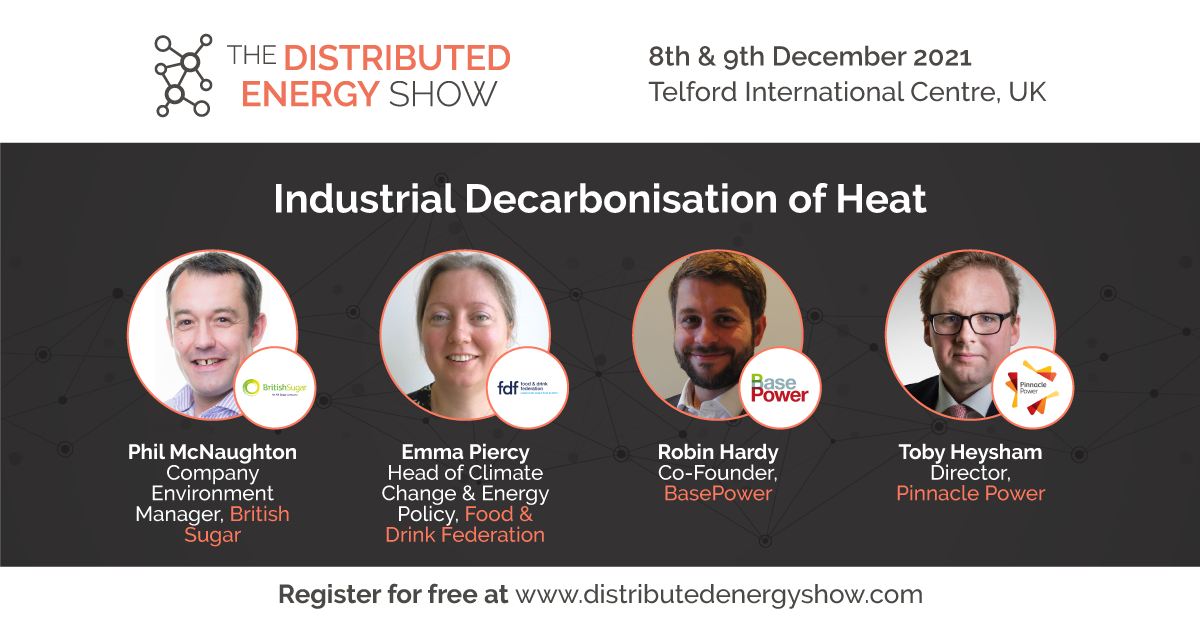
In industrial settings, heat accounts for a large proportion of both energy costs and carbon emissions. On Wednesday 8 December at 3.30pm BasePower’s Projects Director, Robin Hardy will take part in a special panel entitled: “The Industrial Decarbonisation of Heat” which will discuss the key considerations for developing a heat strategy. Moderated by Philip McNaughton, Company Environment Manager at British Sugar, the panel also features Emma Piercy, Head of Climate Change & Energy Policy at the Food and Drink Federation, and Toby Heysham, Managing Director, Pinnacle Power.

The Distributed Energy Show takes place on 8-9 December 2021 and the Telford International Centre and is free to attend. Register here

Double ISO Certification Achieved for BasePower Energy Centre

BasePower_LOGO_RGB.jpg

BasePower announces that the first of its on-site energy centres has been certified with a double suite of ISO standards. The 2.7MW energy centre, developed, built and operated by BasePower, is located on the site of a large manufacturer of convenience foods.

The BasePower energy centre has been accredited with ISO 14001, the Environmental Management Certification, and ISO 45001 for Occupational Health and Safety, covering the operation and management of the Combined Heat and Power (CHP) scheme. This set of procedures will serve to minimise health and safety risks to employees and contractors, and measure the project’s environmental performance.

BasePower intends to roll out ISO certification to its entire portfolio of energy centres across the UK in order to guarantee quality and reliability of management controls across key operational areas.

Dave Holden, Operations Manager, BasePower said:
“As a long term, trusted energy partner to blue-chip industrial manufacturers, a core part of our strategy is to work to internationally recognised ISO standards. By applying responsible corporate governance throughout our fleet of energy centres this poses the least environmental risk and provides an operational framework that is safe for all.”


BasePower to Speak at the Innovation & Investment in Energy Summit

George Fowkes, a founding director of BasePower, has been invited to speak at the Innovation & Investment in Energy Summit on Thursday 24 June, a senior-level forum for those changing the face of the global energy sector. Hot on the heels of securing a £50 million investment fund for new sustainable energy projects, George will be talking about how BasePower is scaling up for future growth, in session 2.

As the energy industry accelerates towards a lower carbon future, the Innovation & Investment in Energy Summit will consider what the energy mix is likely to be and discuss how it might be financed. View the full agenda here.

Access to the event is complimentary for the investment community and members of the Frontier Energy Network. BasePower has some complimentary passes available – contact us if you’d like to listen to the discussions.

Automotive Industry First for BasePower’s CHP and Thermal Oil System

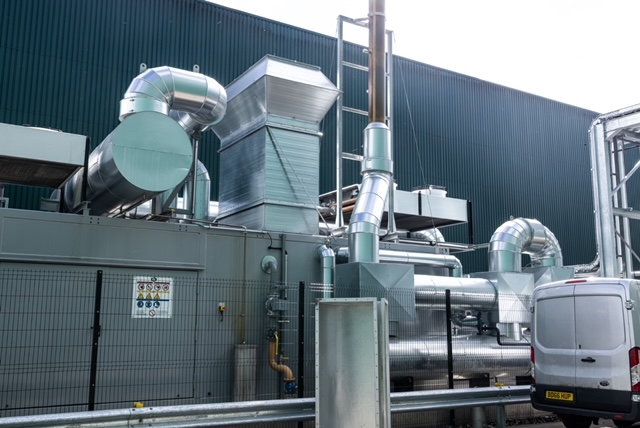
BasePower’s innovative development of energy technologies has achieved an industry first for Tier 1 automotive industry supplier.  A Combined Heat and Power (CHP) scheme providing heat in the form of hot water and thermal oil has been successfully commissioned at the production site in the West Midlands.

Power generated from the CHP energy centre is supplied to the factory, offsetting the power imported from the National  Grid and helping to deliver lower energy bills. Heat from the CHP is supplied to the site’s production processes including Air Handling Units, Ovens and Presses, maintaining them to the required temperature tolerances.

Prior to switch on of the CHP scheme in January 2021, BasePower developed an innovative solution to integrate the waste heat from the CHP with the site’s thermal oil system. Thermal oil heats the presses to the high temperatures required for the site’s injection moulding processes. To date the site has used gas-fired boilers to provide heat to the thermal oil circuit. The CHP heat is now the primary heat source for the system, with the existing boilers used as backup.

Robin Hardy, Projects Director at BasePower said:
“This project demonstrates how CHP can lower energy bills and be a platform for integration with other hybrid technologies.” 

SDCL Energy Efficiency Income Trust plc (SEEIT) signs framework agreement to fund up to £50 million of BasePower projects

BasePower_LOGO_RGB.jpg

BasePower announces that it has signed a framework investment agreement with SDCL Energy Efficiency Income Trust plc (SEEIT) to fund up to £50 million of projects over the next five years.  The agreement will allow BasePower to accelerate delivery of sustainable energy projects for British industry.

BasePower is a growing developer and operator of energy efficiency projects for premier industry brands in the automotive, food manufacturing and logistics sectors. The company recently switched on its eighth energy centre in the UK. Projects span the full gamut of Combined Heat and Power (CHP), solar photovoltaic (PV), resilience and grid upgrades in a wide range of sizes to suit the specific needs of each site.

SDCL Energy Efficiency Income Trust plc (SEEIT) is an experienced investor in sustainable energy and is listed on the London Stock Exchange. The framework agreement will involve SEEIT investing  approximately £10 million per annum over the next 5 years to build out BasePower’s project pipeline. BasePower will manage the development, construction and operation of over 35 MW of new energy efficiency assets. These are likely to include further CHP, efficiency and microgrid projects supporting UK industry as it moves to decarbonised energy. 

Dan Poulson, a founder director of BasePower, said:
“We are delighted to have begun this partnership with SEEIT. Our ability to draw on a facility to finance projects of all technologies remains very popular; it leaves customers free to deploy scarce capital into their core business. We’ve known and respected the SDCL team for some years and we have a shared vision to decarbonise industry economically. This new agreement allows us to expand and broaden our offer to customers. As our work continues to accelerate, this represents a real vote of confidence for the future.” 

ENDS

About SEEIT

SDCL Energy Efficiency Income Trust plc is the first UK listed company of its kind to invest exclusively in the energy efficiency sector. Its projects are primarily located in the UK, Europe and North America and include, inter alia, a portfolio of cogeneration assets in Spain, a portfolio of recycled energy and cogeneration projects in the United States, a regulated gas distribution network in Sweden and, most recently, a portfolio of commercial and industrial solar and storage projects in the United States.

The Company aims to deliver shareholders value through its investment in a diversified portfolio of energy efficiency projects which are driven by the opportunity to deliver lower cost, cleaner and more reliable energy solutions to end users of energy.

Past performance cannot be relied on as a guide to future performance.

Further information can be found on the Company's website at www.seeitplc.com.

Investment Manager

SEEIT's investment manager is SDCL, an investment firm established in 2007, with a proven track record of investment in energy efficiency and decentralised generation projects in the UK, Continental Europe, North America and Asia.

SDCL is headquartered in London and also operates worldwide from offices in New York, Dublin, Madrid, Hong Kong and Singapore. SDCL is authorised and regulated in the UK by the Financial Conduct Authority.

Further information can be found at www.sdclgroup.com.


Is gas-fired CHP future-proof?

Shutterstock - Green future energy small .png


Renewable energy is providing an increasing proportion of the UK’s electricity needs, but grid supplied electricity continues to increase in cost. For industrial processes that use heat, the exact fuels and technologies which will reach ‘net-zero‘ are unclear. What steps can you take to stay competitive now and still set a path to net-zero? We discuss how gas-fired Combined Heat and Power (CHP) fits into the decarbonisation journey.  

 It’s important to remember that CHP power displaces what is known as the marginal generation technology. At present that is either coal, open or combined-cycle gas turbine generation (CCGT). And CCGT is set to remain the marginal generation technology well into the 2030s. A well-configured CHP project is more carbon efficient than any open-cycle thermal generation technology. This principle is at the heard of BEIS’s carbon calculations[1] and the Climate Change Agreement calculation methodology for CHP[2]. So it’s official; good quality gas-fired CHP projects save carbon now and in the future, whereas buying ‘green’ electricity from the grid does not[3].

But more than that, an energy centre with CHP at the heart prepares you for tomorrow, because the grid equipment and heat network installed alongside it allow new technologies to be connected as they become economically viable. The new equipment doesn’t have to bear the full costs of adoption. So it is less risky to put in, and has better payback.

This applies to power tech such as renewables, battery storage and standby generation. It also works for heat, adding additional loads to the heat network and swapping out boilers for heat pumps and steam generators. Being able to evaluate, then manage the install and operation of these technologies is a key organisational skill for the future.

Further into the future, CHP engines installed today can already use significant proportions of hydrogen in their fuel. With the CHP’s heat network always maximising primary energy efficiency, this expensive fuel will be put to its best use. And the network will still be there to eke out fuel economy when the CHP engine is eventually swapped out for a fuel cell or other emerging technology. 

So although buying green electricity for a site looks like a quick win today, it’s the heat and power network funded by a CHP scheme that gives industrial energy users the best skills and options for decarbonisation into the future.

To find out how BasePower can help your business prepare for decarbonisation, contact us today.


Sources:

1. Valuation of Energy Use and Greenhouse Gas, BEIS 2019

2. Climate Change Agreements Operations Manual, Environment Agency 2018

3. Valuation of Energy Use and Greenhouse Gas - see section 3.39 in particular

BasePower receives £800,000 boost from Midlands Engine Investment Fund

Dan Poulson BasePower.jpg

Thanks to an investment boost from Maven Capital Partners, BasePower is able to continue its support for British manufacturing as it transitions to sustainable energy.

An £800,000 loan from the Midlands Engine Investment Fund (MEIF) Debt Finance, managed by Maven Capital Partners, has been granted to Hams Hall Sustainable Energy Ltd (“HHSE”), part of a group of companies that have been set up by BasePower.

The funding will be used to support the delivery of new BasePower contracts, including the purchase of a CHP engine for a leading Tier 1 supplier to the global automotive industry based in the Midlands. CHP technology captures the heat formed during power generation. It is then put to productive use during the manufacturing process, resulting in reduced energy costs and carbon emissions.

Dan Poulson, Founding Director said: `
It is great to receive the backing and support of MEIF and Maven. The funding will enable us to provide our key clients with substantial savings on energy that would otherwise have been supplied from the electrical and gas grids and helps support the UK’s transition to a low-carbon economy.”

Basepower is led by a strong management team which has previously developed more than 30 energy generating schemes for a range of clients in the public and private sectors.

Read release in full.


Investing in Energy Projects: How to Solve the CAPEX Dilemma

shutterstock_1290452857 small.jpg

As a result of the economic downturn caused by COVID-19, many significant CAPEX projects have been delayed or cancelled. Most businesses have strict return on investment criteria, meaning energy projects often lose out to quicker revenue generating projects.  

However, UK manufacturers who are spending upwards of £1million a year on energy are benefiting from a radical change in the way they procure and receive energy. Rather than just being billed for what is used from the grid, on-site energy schemes, such as BasePower’s projects in the food & drink and automotive sectors, allow manufacturers to implement a fully-financed energy centre without upfront investment or risk. They also significantly reduce energy costs and carbon emissions.

 A BasePower-funded energy centre will deliver savings in the region of 15% on the grid cost of energy supplied. A fully-containerised energy centre can be designed, procured, built and switched on in around 12 months, with no interruption to business operations. You are then charged at a fixed percentage discount (“% Saving”) to what you pay for your grid cost of energy. Energy costs fall as soon as the scheme is switched on and the operational savings can be immediately realised by the business.

Due to the recent changes in the energy market, BasePower has recently added a new contract option to its successful “% Saving” product. In the new arrangement, termed “Heat and Power Purchase”, the customer and BasePower collaborate to purchase gas for the CHP at the most favourable rate. The customer pays for the gas fuel plus a low generation fee, in addition paying for CHP heat distribution at a fixed % discount to grid prices. This works particularly well in the current high spark spread environment and protects against rising carbon taxes on fuel, providing further opportunity for savings.

If CAPEX is still available and you wish to fund your own energy centre, BasePower can de-risk by developing, constructing and operating the energy centre on an EPC (Energy Performance Contract) basis. A well-configured energy centre should be able to pay back in under four years. This option is also proving popular.

All BasePower designed schemes achieve Good Quality CHP (CHPQA), meaning that Climate Change Levy (CCL) is not payable on CHP fuel or outputs, while the carbon reductions from CHP also contribute to customers’ Climate Change Agreements (CCA). These are additional fiscal benefits.

 Getting the right energy scheme in place will have a clear impact on the subsequent energy and carbon savings that you can expect. If you would like to review the potential for installing an on-site power generation scheme and see the various funding options available, please contact BasePower for an initial discussion.